
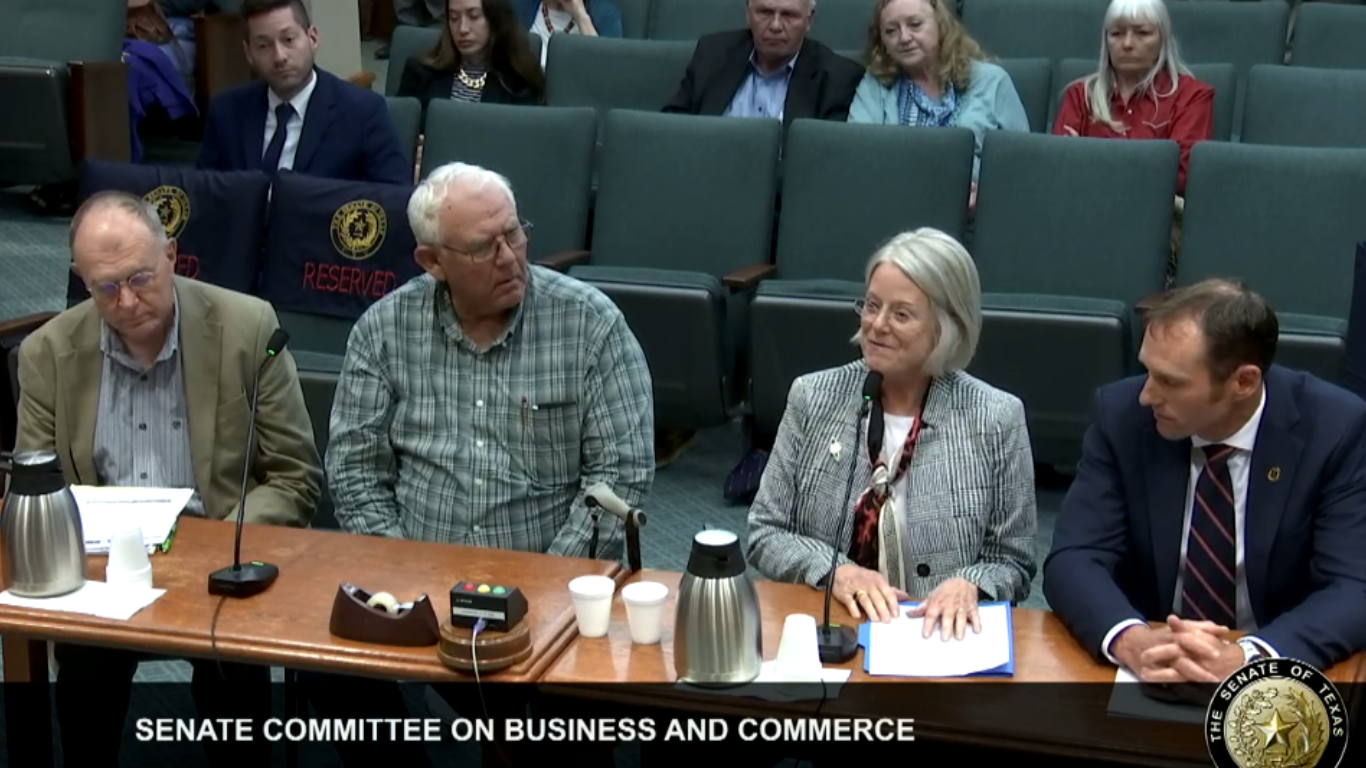
During the 89th Texas Legislative session last spring, rural landowners traveled to the Capitol from all over the state to emphasize the importance of renewable energy in rural communities. The bill responsible for mobilizing these individuals, if passed, would have imposed stringent siting restrictions on wind and solar projects, even on private land. Landowners’ testimonies played a pivotal role in preventing this bill’s passage, and many others have publicly shared similar stories in the wake of the legislative session.
Meredith DeBorde, a third-generation family farmer from Ennis, explained in a committee hearing how solar farming transformed her family’s livelihood. The cost of running a farm has drastically increased in the past few years, mainly due to increases in input costs such as fertilizer and fuel. Her family was struggling to stay afloat until they added a solar farm and agrivoltaics (in the form of sheep grazing). The revenue from the project allowed the family to purchase an additional plot of land and expand their farm. It also created 300 new jobs in their local community, thus benefiting the local economy.
Another farmer, Brian Zyblot, testified on how renewables have expanded education in Lufkin. Renewable projects have brought $30 million in revenue into Lufkin’s school district, revitalizing the district and expanding opportunities for local children. Zyblot’s personal solar farm is profitable enough that he was able to send his children to college using the money. On a more general note, he emphasized that rural landowners like he and his neighbors did not appreciate legislators telling them how to use their land. This was a common theme across testimonies; many landowners felt that the bill was an infringement upon their property rights.
Testimonies such as these had significant influence on the bill’s trajectory. Over 100 people registered to testify in overwhelming opposition to the bill, and legislators listened closely to landowners, as they would have been the group most directly affected by the bill. Given the bipartisan criticism from a diverse array of individuals, opponents succeeded in stopping the bill in the House. This illustrates the power that individuals can wield in the state legislature. The American legislative system was intended to reflect the interests and values of the people it represents, and a good legislator will take that duty seriously. Legislators are elected to implement their constituents’ policy preferences, so aside from voting, the best way for constituents to impact state policy is to advocate for themselves to their legislators.
The next Texas Legislative Session will begin this coming January, and issues of importance to rural Texans will undoubtedly arise once again. Energy will be a prominent topic due to the rapidly evolving energy landscape in the state. As in the last session, rural Texans can shape state policy by getting involved in the legislature. The group Rural Texas Energy Voices aims to empower rural Texans to do so. The organization offers periodic legislative updates, which can support landowners who want to become involved in the legislature but are unsure how to begin. TXSES collaborates with Rural Texas Energy Voices and will also publicize legislative updates throughout the session, so interested individuals can monitor our announcements for legislative information as well. Lastly, concerned constituents should contact their legislators directly and advocate for policies that positively impact communities across the state. Because policies often have a substantial effect on the everyday lives of citizens, citizens can in turn substantially affect the trajectory of state policy.
Image: TXSES Executive Director Patrice "Pete" Parsons testifying at the Texas Capitol alongside Texas ranchers and farmers.