
by Jeremy Lian, TXSES Intern
The 2026 World Cup sparked an incredible wave of excitement across the United States, filling local restaurants, streets, parks, and public spaces with fans from across the globe coming together to experience the world’s game. For Texas, hosting World Cup matches in Dallas and Houston was more than a sports moment — it was a chance to showcase Texas hospitality, culture, and energy on the global stage.
But all that fun and excitement came with a major energy demand. Modern stadiums don’t just power the lights on the field. They have massive video boards, air conditioning to keep players and fans cool in the Texas heat, concessions operating throughout the event, security systems, transportation infrastructure, and more. And that doesn’t even include the energy used for live broadcasts being streamed into households around the world, nearby businesses, fan festivals, and the thousands of vehicles bringing people to and from the event.
This demand raises an interesting point: large events often require large amounts of energy, but they also reveal an opportunity in plain sight. The same stadiums, parking lots, convention centers, commercial properties, and other large facilities that consume immense amounts of electricity can also help produce it. With solar panels, specifically solar carports and rooftop solar, Texas can turn ordinary paved spaces and buildings into clean energy assets, creating long-term benefits for both the grid and local communities.
The Energy Behind the Event
The scale of demand is not hypothetical. AT&T Stadium — known as Dallas Stadium during the World Cup — hosted nine matches, more than any other venue in the tournament. The stadium has been reported to draw up to 10 MW of electricity during peak game-day demand. That substantial amount is calculated before accounting for the broader energy footprint around the event, such as hotels, restaurants, fan zones, transportation, and the digital infrastructure needed to stream events to viewers around the world. To put it into scale, 10 MW of electricity can power ~6,000 average Texas homes at any given moment.
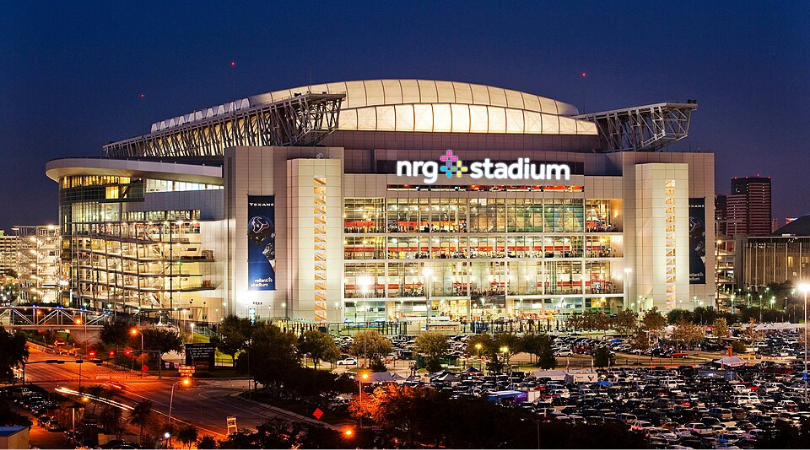
Houston’s NRG Stadium is already showing how large venues can be part of the energy solution. The stadium has incorporated nearly 600 solar panels across solar pedestrian bridges, entrance canopies, and EV charging zones, adding roughly 180 kW of on-site solar capacity. While these systems do not eliminate the peak energy demand of a major event on their own, they show how large venues, specifically sports stadiums, can begin using their physical footprint to contribute to clean power generation.
Another World Cup host venue, Mercedes-Benz Stadium in Atlanta, shows this same idea at a larger scale. The stadium and surrounding Georgia World Congress Center campus include 4,000 solar PV panels installed across ticketing canopies, parking areas, and VIP entrances. Together, those panels produce approximately 1.6 million kWh of renewable electricity each year—enough to power nine Atlanta Falcons games or 13 Atlanta United matches. Like NRG Stadium, Mercedes-Benz Stadium shows how major venues can use their rooftops, parking areas, and pedestrian spaces to generate clean power while also making renewable energy visible to fans.
From Parking Lots to Power
This same idea can be applied far beyond stadiums. Across Texas, large parking lots surround schools, shopping centers, office buildings, airports, municipal facilities, and car dealerships. These spaces serve thousands of vehicles and sit under the Texas sun for hours each day, yet most do little more than absorb heat.
According to Jason Pittman, co-founder and president of (TXSES Business Member) Big Sun Solar, “Texas is honestly one of the best places in the country to be doing this kind of work, and parking lots are a big part of why.” The state gets plenty of sunshine, while its car-centered communities contain an enormous supply of parking lots that are already cleared, flat, paved, and generally located near existing electrical infrastructure. Solar carports can therefore generate electricity close to where it will be used without competing with productive farm or ranch land.
The most immediate benefit, however, may be easier to understand through shared experience. We’ve all been there: getting into our cars on a hot Texas afternoon only to be scorched by the seat belt buckle or steering wheel before we can even start driving. Solar carports can provide the shade that prevents that experience from happening while generating electricity at the same time.
That everyday interaction is part of what makes solar carports unique from other solar projects. Solar generation is often associated with distant utility-scale facilities or rooftop panels that remain largely out of sight. Solar carports place the technology directly within daily life. People park beneath them at work, walk under them at the grocery store, charge their vehicles beside them, and experience the immediate benefits whenever they return to a cooler car.
As solar carports become more common, they can make solar feel less like a distant or unfamiliar technology and more like a normal part of everyday infrastructure.
For property owners, the benefits extend well beyond shade and electricity. Solar carports can transform an otherwise empty parking lot into infrastructure that protects vehicles, supports EV charging, creates usable outdoor space, improves the customer experience, and may even generate additional revenue through paid or premium covered parking.
Car dealerships provide a particularly clear example. During a recent attempt at car shopping in sunny, 99-degree weather, I left with nothing but a free bag of popcorn, some sweet tea, and near heat exhaustion. Walking between rows of vehicles reflecting the blazing sun onto my skin did not exactly encourage me to stay longer. As a matter of fact, it was part of the reason I went home. Solar carports could have made that experience more comfortable while simultaneously producing electricity and protecting the dealership’s cars.
Big Sun Solar has already installed solar carports at car and semi-truck dealerships through CPS Energy’s community solar program in San Antonio. In addition to providing shade for customers and vehicles, the panels can act as a physical shield against hail. Pittman said that this protection has been significant enough for some dealerships to realize savings on their annual insurance premiums based on the amount of inventory covered.
Airports offer another natural opportunity. After a long flight—and perhaps a four-hour nap that leaves you unsure of what city or time zone you are in—the last thing most travelers want is to step outside into the blistering Texas heat and enter a car that probably feels even hotter.
At El Paso International Airport, Big Sun Solar was contracted to install a solar photovoltaic superstructure over their parking areas. The project demonstrates how shaded parking can improve the traveler’s experience while also producing electricity. According to Pittman, airport visitors are often willing to pay slightly more for covered parking, allowing the additional revenue to help offset the project’s cost and shorten its payback period. After the system pays for itself through parking revenue and electricity savings, it can continue generating low-cost power for decades.
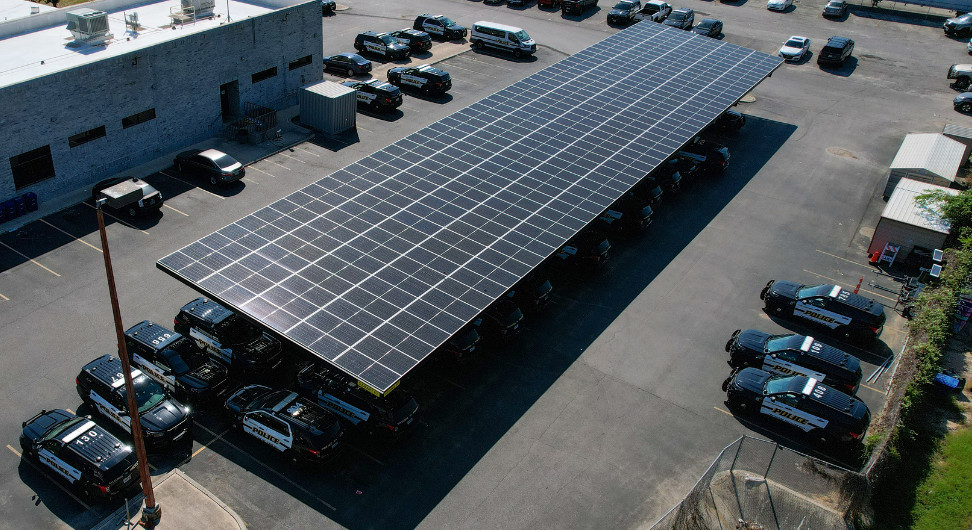
The same logic applies to municipal vehicle fleets. San Antonio’s municipal solar program includes solar carports at police substations, where the structures shade and protect patrol cars. Vehicles that sit in the shade require less air conditioning to reach a comfortable temperature, reducing the fuel and energy needed to cool them before officers begin driving. It may seem like a small benefit for one car, but those savings can become meaningful when repeated across many vehicles throughout an entire summer—and potentially much of the year, given the unpredictable nature of Texas weather.
The Opportunity Beyond Kickoff
Large venues, such as the stadiums used for the World Cup, airports, and convention centers, are especially strong candidates for this model because they typically combine two important features: expansive parking lots and substantial electricity demand. Installing solar near the buildings and operations consuming power places generation close to the load, which potentially reduces interconnection complexity while making productive use of land that has already been paved.
Texas has tremendous, untapped potential to expand this model. Parking lots at airports, stadiums, convention centers, dealerships, schools, and municipal buildings could all generate clean electricity without requiring additional undeveloped land. Realizing that potential, however, will require city and county governments, venue operators, and other property owners to recognize the full value of what these spaces could become.
As Pittman explained, “The opportunity is enormous; we just need partners ready to act on it.”