
By Kathy Jack, PhD, TEPRI
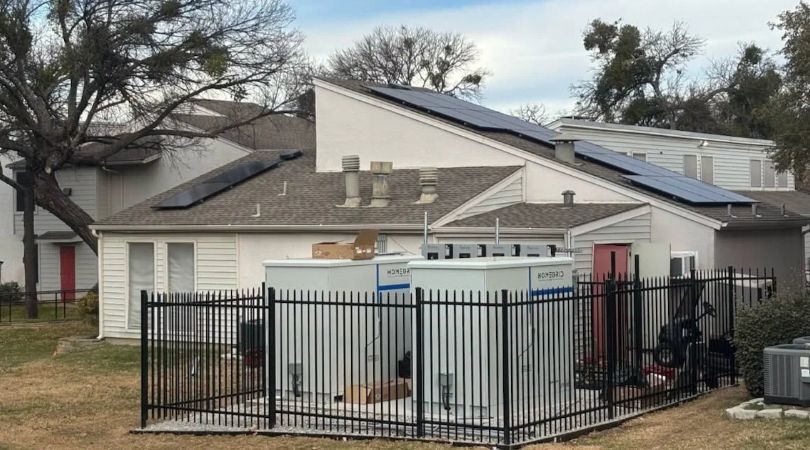
This year, the Texas Energy Poverty Research Institute (TEPRI) and Foundation Communities (FC) are celebrating the opening of two neighborhood-based resilience hubs, equipped with solar and battery energy storage systems (BESS), at FC’s Sleepy Hollow and Shadow Brook apartment communities in Arlington, TX. These innovative hubs may serve as a model for reducing risk and energy costs for vulnerable communities facing the compounding challenges of extreme weather and energy insecurity.
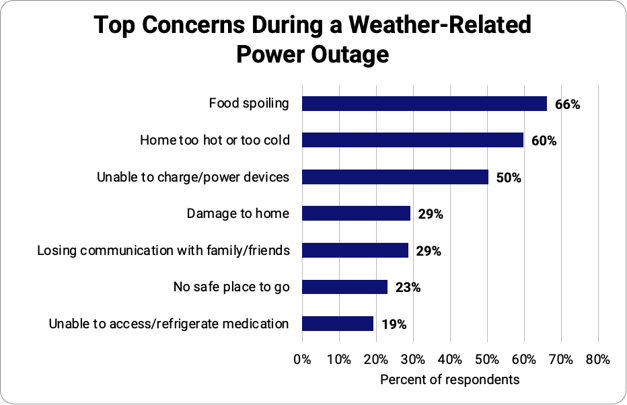
More than 4 million Texas households with low-to-moderate incomes are especially vulnerable during power outages and extreme weather events, which create risks to health and well-being such as heat stress, inability to refrigerate medications, food spoilage, and challenges evacuating. TEPRI’s Community Voices in Energy Survey of low-to-moderate-income Texans shows that 59% of households are somewhat to extremely concerned about weather-related power outages. In an outage, 48% say they would stay home and 23% say they have no safe place to go (Figure 1).
Resilience hubs are trusted community centers enhanced to support community members to prepare for, manage, and recover from disruptions. Foundation Communities provides affordable multifamily housing and free on-site support services across 32 locations in Austin and three in North Texas. The Arlington hubs will provide safe spaces with backup power and essential services, close to home.
TEPRI works to address acute energy burdens for Texans through affordable, reliable, and clean energy solutions. Distributed energy resources (DERs) are an important tool for furthering these goals, yet low-income communities face barriers to access, including upfront capital, financing, and ongoing maintenance costs. Thanks to a grant from Google, TEPRI partnered with FC and the selected contractor, Holistic Utility Solutions, to plan, design, and install two mid-size commercial solar and BESS systems at the roughly 3,000-square-foot learning center in each community. Figure 2 includes system details for each hub site.
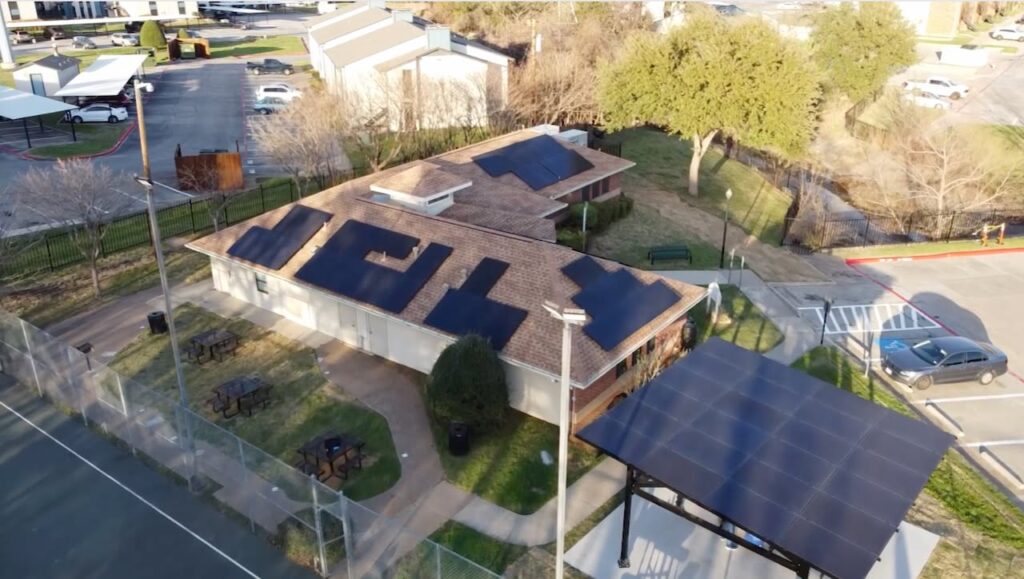
Shadow Brook Resilience Hub
PV: 28.44 kWDC
BESS: 307.2 kWh / 60 kWAC
Residential Units: 403
Hub sq. footage: 3,185 sq. ft.
Daytime use: Learning Center
Photo credit: Russ Rhea
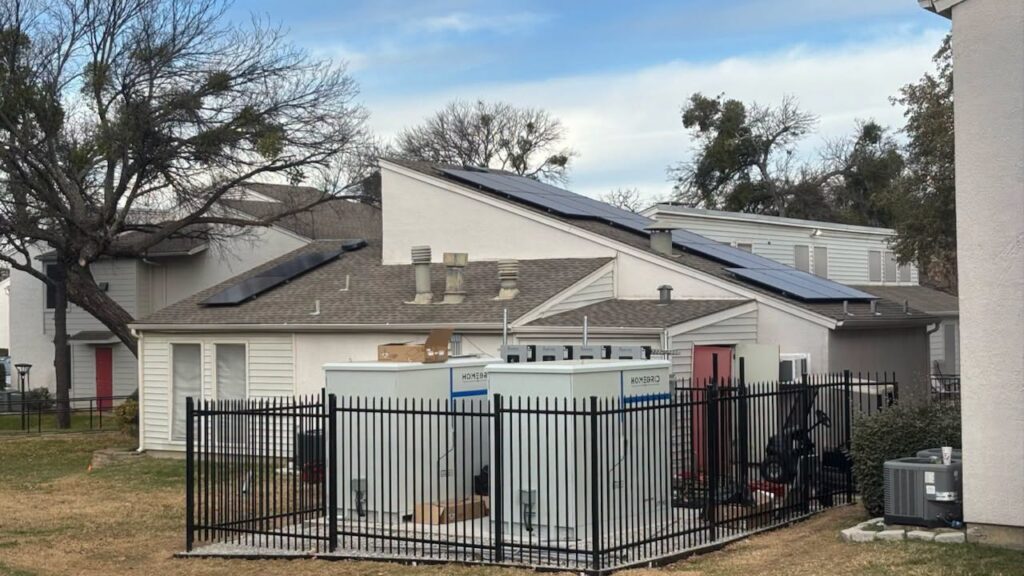
Sleepy Hollow Resilience Hub
PV: 31.60 kWDC
BESS: 307.2 kWh / 60 kWAC
Residential Units: 128
Hub sq. footage: 3,128 sq. ft.
Hub Daytime use: Learning Center
Photo credit: TEPRI
Figure 2. System Details for the Arlington Resilience Hubs
Design goals include providing at least 24 hours of backup power (on a peak-demand day) for hub services at the learning centers, and achieving year-round energy savings through energy offset, peak shaving, and participation in a virtual power plant (VPP) program. TEPRI is researching the potential for VPP participation to improve the value proposition and reduce barriers for organizations serving low-income communities to access these systems.
Virtual power plants aggregate DERs such as batteries and manage them together (Figure 3) to add capacity during times of grid strain. Aggregators can avoid purchasing electricity when prices are highest, and can compensate the DER host for access to their battery. In Texas, qualifying aggregators can also sell into the wholesale electric market through ERCOT’s Aggregate Distributed Energy Resource (ADER) Pilot Project. Working with TEPRI and FC, FC’s retail electric provider created a pilot commercial VPP program to enroll the batteries. A grant from Lyda Hill Philanthropies will support TEPRI’s monitoring of the systems’ performance and savings for two years post-installation.
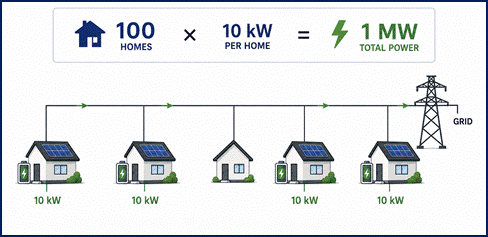
Figure 3. Virtual Power Plant Concept
FC will reinvest savings from the solar and BESS into hub supplies and the free on-site services provided at Shadow Brook and Sleepy Hollow, including youth after-school and summer programs, nutrition programs and a food pantry, tax preparation for residents and neighbors, ESL classes, and eye and medical exams.
FC worked closely with TEPRI to plan for hub “activation” in the event of an extended power outage or emergency. Finding little existing guidance, TEPRI created a hub preparation and operations workbook that can be tailored to each host organization. Through the process, FC has created an initial standard operating procedure for these and future hubs across its properties.
Together, the partners continue to learn from this pilot. Opening a resilience hub requires a strong organizational commitment. The current application of mid-size commercial BESS to balance resilience and savings goals is still uncommon and brings its own challenges, particularly at sites wired for single-phase service or when pursuing VPP compatibility. TEPRI looks forward to future phases and will continue to share lessons learned with others looking to replicate or adapt the model.
For more information, please visit TEPRI’s website, tepri.org, or contact kathy@tepri.org.