by Jeremy Lian, TXSES Intern
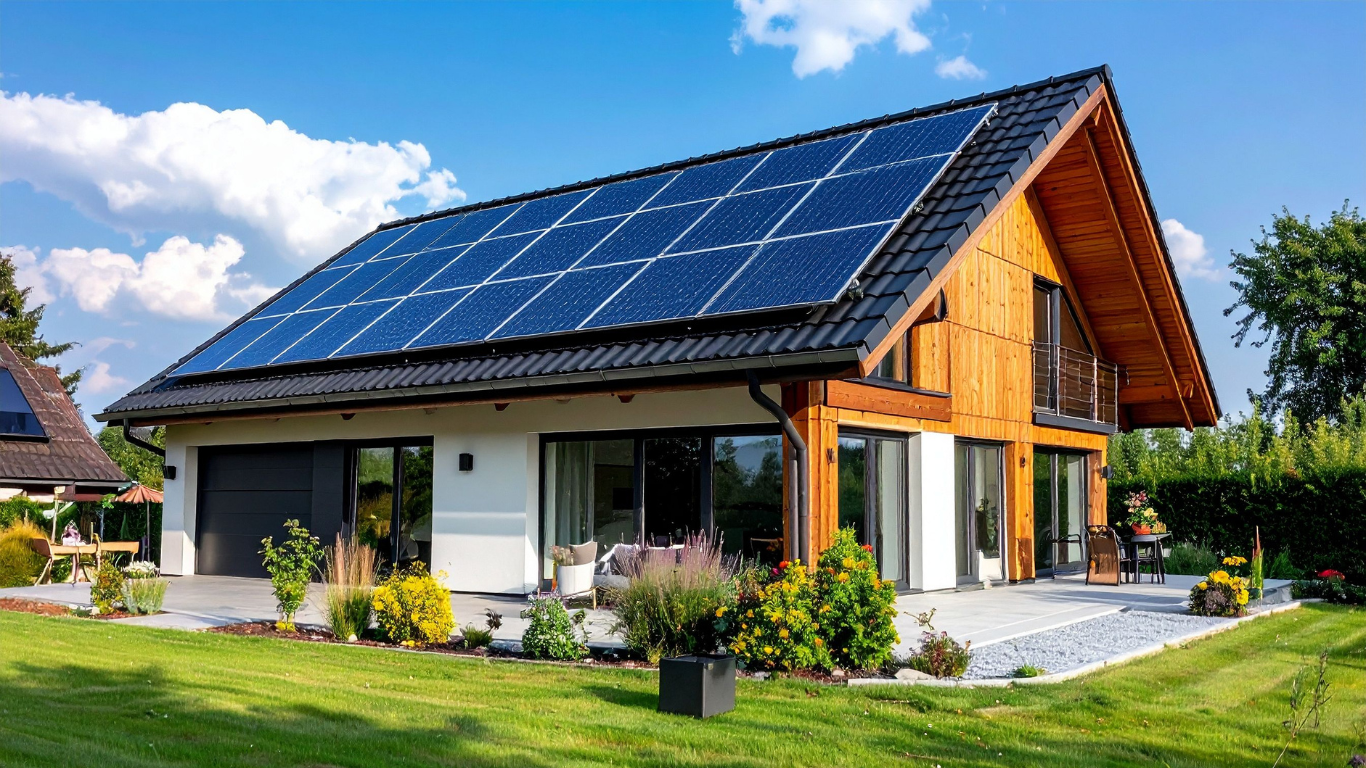
Globally, solar is becoming more common to the average resident through rooftop panels, home batteries, and even small plug-in solar systems. For households, distributed solar is not just about protecting the environment — it’s about lowering electricity costs, gaining more control over energy use, and becoming less dependent on a grid that is facing immense pressure from increasing demand, AI growth, extreme weather, and volatile fuel prices.
Different countries are approaching this energy transition in different ways. Australia is actively showing what can happen when rooftop solar and home batteries reach mass adoption, whereas Germany is more focused on increasing accessibility through smaller plug-in solar systems that can work for renters and apartment residents. Although they’re taking different approaches, both countries are showing how solar can make an immediate impact, and this impact is something well within reach for Texas.
Australia
Australia is one of the major proponents of this household energy transition. The country already had massive rooftop solar adoption, with 28.3 GW across 4.3 million households and businesses at the end of 2025, but a recent “battery boom” took the transition to another level. Specifically, Australia recorded that in the second half of 2025, a record 183,245 batteries were sold, a number that was more than the previous four years combined.
What exactly is so special about adding batteries to a solar system? It’s actually really simple: rooftop solar produces the most amount of electricity during the day when the sun is out, but many households actually use more power in the evening. The absence of a battery in a home system means that any extra energy generated by solar is fed into the grid during the day, while the home ends up having to rely on the grid later, when electricity can be more expensive. Adding a battery allows homes to turn rooftop solar into a complete household energy management tool where families can store electricity generated during the day and use it when power is most needed, reducing bills and increasing overall control over their own energy use.
Batteries also matter beyond the individual household. Historically, gas-fired power plants have often filled the gap when solar output falls in the evening. Batteries are beginning to reduce some of that need in Australia by shifting solar power from the middle of the day into the evening. In the first quarter of 2026, renewables supplied 46.5% of generation in Australia’s National Electricity Market, while record distributed rooftop solar output helped offset growth in underlying electricity demand. The impact of storage is clear, with batteries becoming central to Australia’s future grid planning, now making up 49% of total capacity in the National Electricity Market connections pipeline.
Germany
Germany, on the other hand, shows how a mature solar market can continue evolving. Germany had already built a strong rooftop solar market through its broader Energiewende, or “energy turnaround,” but early residential solar was still mostly centered on homeowners with suitable roofs. Now, Germany is entering another phase of the household solar transition by pushing smaller plug-in solar systems, often referred to as “balcony solar”. These systems typically consist of one or two panels that can be installed on balconies, terraces, garages, or small outdoor areas. Although they don’t have the capabilities to power an entire living space, they can certainly reduce the amount of electricity a resident buys from the grid, saving money over time without the use of a full rooftop system that may not be possible in the first place.
This solves a different problem: access. Traditional rooftop solar usually works best for homeowners with suitable roofs and enough money to pay for a larger system. Germany has many renters and apartment residents, so balcony solar gives more people a way to participate in distributed solar even if they do not own a roof. In 2024, Germany passed legal changes making it harder for landlords or apartment-owner associations to block plug-in solar systems without exceptional justification. The model has grown quickly, with Germany’s Federal Network Agency registering about 430,000 new plug-in balcony solar installations in 2025, equal to about 0.5 GW of capacity. Germany also has a strong home battery market, with battery ownership estimated at 1.2 million households as of January 2024.
The U.S. and Texas
The United States and Texas sit somewhere between these two models. Nationally, the U.S. residential solar market installed 1,179 MWdc in the first quarter of 2026, up 6% year-over-year but down 15% from the previous quarter. At the broader power-sector level, solar and battery storage together accounted for 91% of all new electricity-generating capacity added in the U.S. during the first quarter of 2026. Texas, meanwhile, has become one of the most important solar states in the country, with 53,568 MWdc of installed solar, 29,163 MWh of storage capacity, and solar providing 11.44% of the state’s electricity. ERCOT estimated Texas rooftop solar capacity at about 3,110 MW in 2024, with continued growth projected.
Australia’s model is relevant to Texas because it shows how rooftop solar becomes more valuable when paired with batteries. That matters as Texas faces higher electricity demand from population growth, extreme heat, and new large-load users such as data centers. For more on how AI and data center development are shaping renewable development in Texas, read TXSES’s article “Renewable Development in the Golden Age of AI.” Germany’s model is also relevant because it raises a different question: how can renters, apartment residents, and lower-income households participate in distributed solar?
Texas has the sunlight, the demand growth, and the need for grid resilience. The opportunity now is not simply to build more solar, but to make sure residents can actually benefit from it. Countries like Australia and Germany are proving that household solar can be more than a climate solution— it’s a way for ordinary people to take part in the global energy transition.