
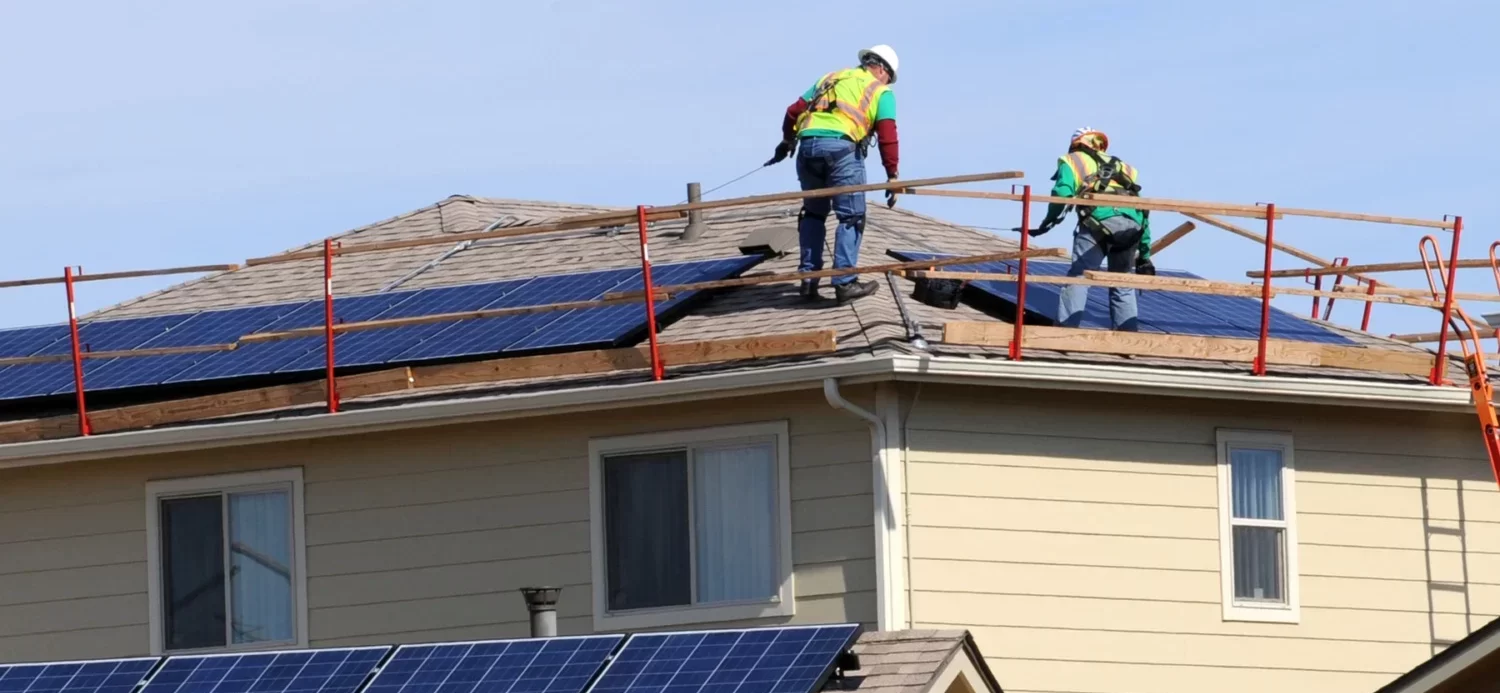
SB1202 gives homeowners a powerful new tool to bypass long delays from local authorities, making it easier to get clean, resilient home power.
By Ian Seamans
City Hall Advocate
Environment Texas Research & Policy Center
The adoption of solar energy in Texas is getting a major boost! Thanks to Senate Bill 1202, which passed in the 89th Texas legislative session and is now in effect, the time-consuming process of getting permits and inspections for residential solar and battery storage systems can now be streamlined. This new law gives both homeowners and solar installers a powerful new tool to bypass long delays from local authorities, making the path to clean, resilient home power much faster and more predictable.
This article breaks down how this new, optional permitting path works, what it covers, and the steps installers must follow.
What is SB 1202 and What Does It Cover?
SB 1202 creates an alternative path for the review and inspection of residential backup power systems—installations designed to provide power to a single- or two-family home and connected at 600 volts or less. This includes:
- Rooftop Solar
- Battery Energy Storage Systems
- Generators
- Other electricity generation or storage 600 volts or less
The bill allows installers to utilize qualified third-parties to perform the plan reviews and inspections that were historically done only by the local municipality, or the Authority Having Jurisdiction (AHJ). While cities are not required to speed up their own processes, installers can now choose this third-party option to accelerate their projects.
The Third-Party Permitting Process
Step 1: Choosing the Third-Party Path
The process begins with the installer deciding whether to use the AHJ (the city) or a qualified third-party for either the plan review, the project inspection, or both.If the installer chooses the AHJ, the process remains the same as before, with no mandated deadline for the city to complete the review or inspection.
If the installer chooses a qualified third party, the third party will then need the AHJ’s applicable code and regulations. The AHJ must publish their applicable code and regulations online or provide them upon request within 2 business days. If the AHJ does not publish or provide the code and regulations within this timeframe, the third party may use the applicable section of the International Residential Code.
Step 2: Review and Inspection by the Qualified Third-Party
Once the third-party has the necessary code information, they conduct the required plan review and/or inspection. While the third-party is not required to conduct the plan review or inspection within a certain timeframe, they will be paid for this service by the installer so they are expected to be timely. It is also important to note that virtual inspections and using automated rooftop solar permitting tools like SolarAPP+ are explicitly allowed in the legislation.
Step 3: Notification and Beginning Construction
Whenever the third party has completed the plan review and/or inspection, they must submit the documents and a notice to the AHJ within 15 days of it being completed.
Once the third party has notified the AHJ that this installation is utilizing a third party under SB1202 and provides the documentation of plan review and/or inspection, the installer may begin construction of the project. The AHJ may not require a fee for the plan review or inspection that was done by the third party.
Step 4: Final Permit Issuance
Within three business days of receiving the notice and documents from the qualified third-party, the AHJ must issue the appropriate final approval, permit, or certification for the project.
Frequently asked questions:
Who is a qualified third-party?
Third parties for permit review and/or inspection include:
- Master electricians
- Certified electrical inspectors
- Individuals employed by a Texas AHJ to review development documents
- Licensed engineers
The third party may not be the homeowner or installer.
Does this apply to permits or fees for interconnection with transmission and distribution utilities (TDUs), utility co-ops, or municipally owned utilities?
This law does not apply to interactions with transmission and distribution utilities, however many TDUs do require a permit from the AHJ, which is provided in the third-party process within 3 business days of the AHJ receiving notice from the third-party that the project has been approved.
Where do I find a qualified third-party to inspect my project or approve plans?
The Texas Solar Energy Society (TXSES) is the residential rooftop solar industry’s nonprofit statewide organization that can help identify qualified third-parties for installers.
If the inspection or plan permit results in damage, who is liable?
The third-party is liable for damages resulting from their own negligent acts or omissions in conducting the review or inspection. The AHJ is not liable for damage resulting from third-party reviews or inspections.